
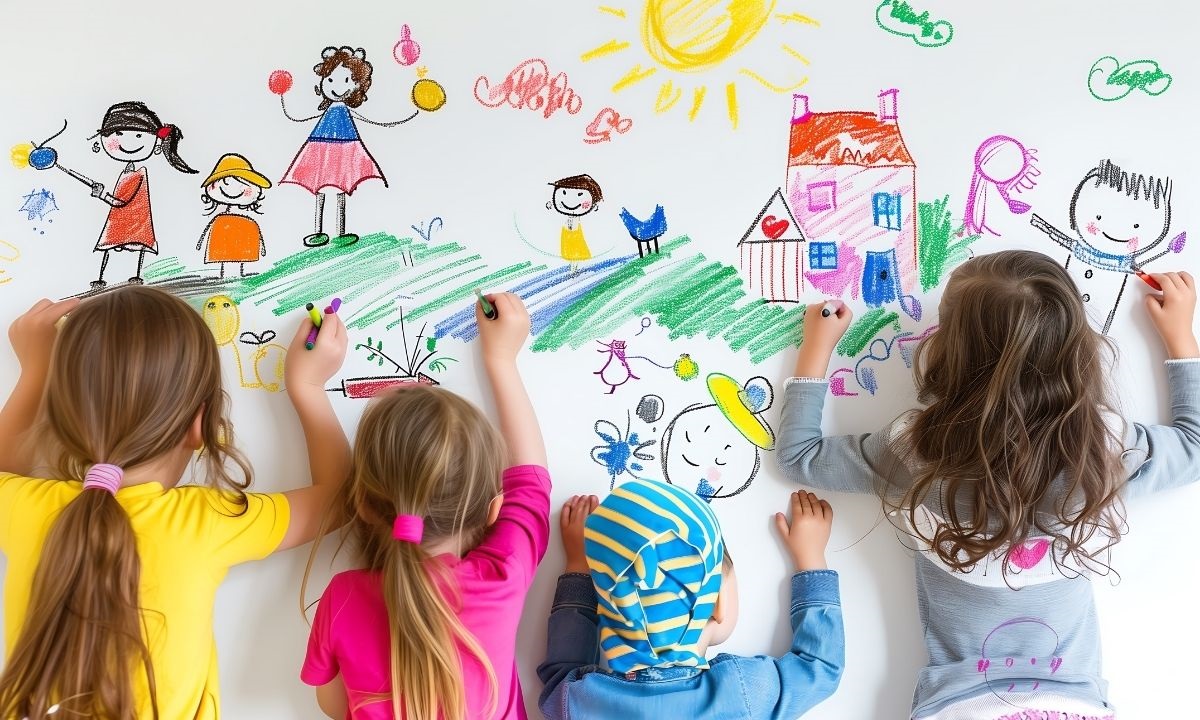
Encouraging creativity through art displays goes far beyond decorating your home.
When children see their artwork displayed with care, they feel valued, capable, and inspired to keep creating.
Art displays become a powerful form of communication, telling children that their ideas matter and their creativity has a place in the world.
Why Art Displays Matter for Creativity
Children are naturally creative, but confidence grows when effort is recognized.
Displaying artwork sends a clear message: creativity is worth celebrating.
This recognition helps children take creative risks, try new techniques, and express emotions freely.
When art is displayed at eye level and treated with respect, children feel proud of their work and motivated to explore their imagination further.

This art picture frame adopts a book-style design, a metal hinge, and a front-opening design, allowing you to change pictures like flipping a book. It has a magnetic closure so you can easily open and close the frame.
Creating a Dedicated Art Display Space
A dedicated art display area gives creativity a home. This doesn’t require a large wall or elaborate setup.
A small gallery in a hallway, playroom, or bedroom works beautifully.
Using consistent frames or clip systems creates visual harmony while allowing artwork to shine.
When children know there’s a special place for their creations, they’re more likely to engage in art regularly and thoughtfully.
Rotating Artwork to Keep Creativity Fresh
Rotating displayed artwork keeps creativity alive and exciting. Instead of crowding walls with every piece, swap artwork weekly or monthly.
This approach prevents overwhelm while giving children something to look forward to.
Rotation also teaches that creativity is ongoing—not every piece has to be permanent to be meaningful.
Older pieces can be stored, digitized, or revisited later, reinforcing the idea that growth happens over time.
Involving Children in Display Decisions
Letting children help choose which pieces are displayed builds confidence and decision-making skills.
Ask them why a certain piece feels special or what they like about it.
These conversations deepen self-reflection and artistic awareness.
Children who participate in display decisions feel ownership over their creative process, making art more intentional and rewarding.

Display your photos, kids’ artwork, posters, or cards with the strong magnets and display bar. Hang the bars side by side for one long bar, place them apart for two display bars.
Using Displays to Encourage Creative Growth
Art displays can highlight progress rather than perfection.
Showing early scribbles alongside newer drawings helps children see how their skills evolve.
This visual journey encourages perseverance and resilience.
Displays can also be themed around seasons, emotions, or school projects, offering gentle prompts for new creative directions without pressure.
Balancing Praise and Creative Freedom
While art displays celebrate creativity, it’s important not to turn them into performance spaces.
Praise effort, experimentation, and expression—not just finished results.
Avoid comparing artwork or focusing solely on praise from others.
The goal is to support intrinsic motivation, helping children create because they enjoy it, not just because their art will be displayed.
Encouraging creativity through art displays is about creating an environment where imagination feels safe and valued.
Thoughtful displays nurture confidence, curiosity, and emotional expression.
By making space for children’s art in your home, you’re not just decorating—you’re building a foundation for lifelong creativity.