
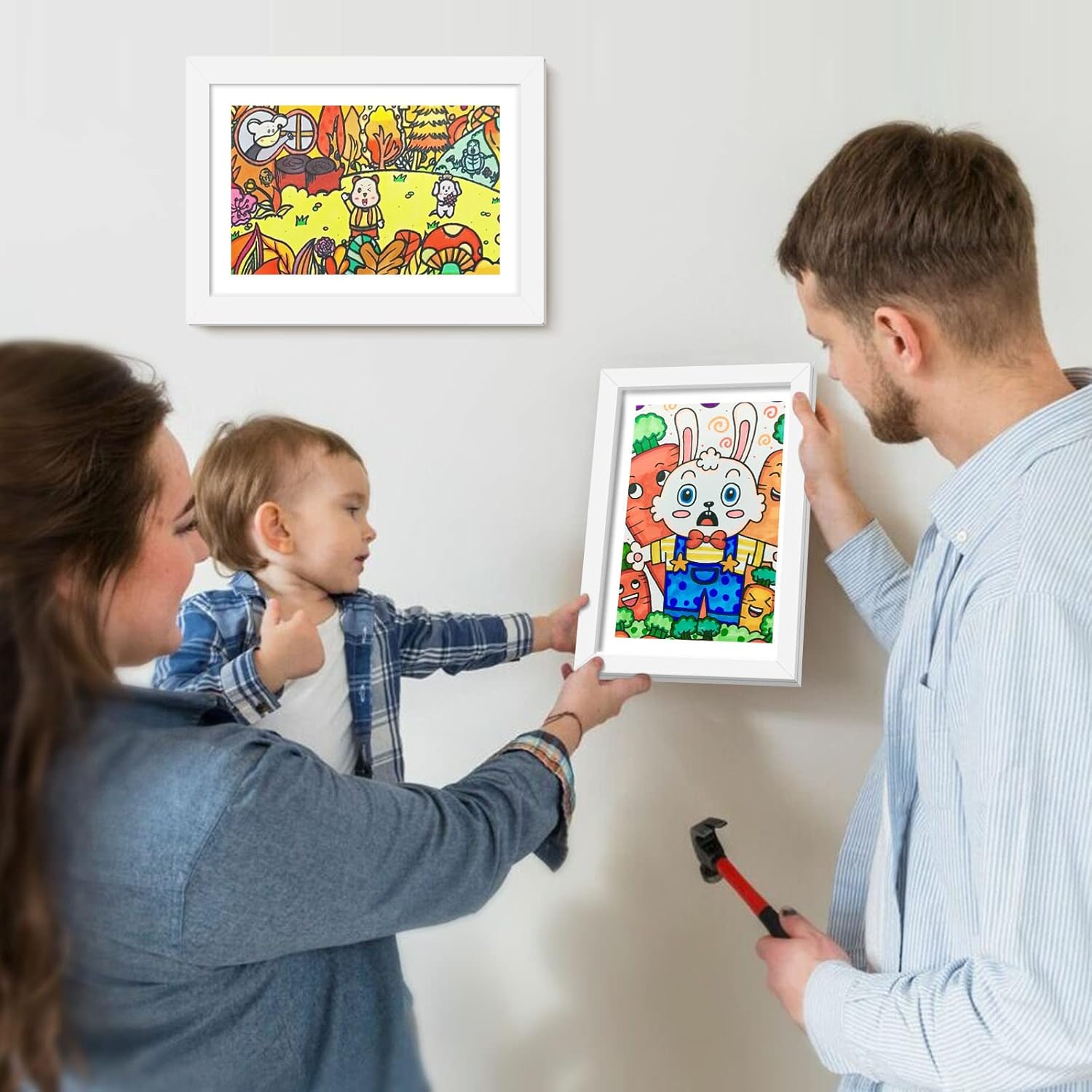
Saving art from each grade is a simple and meaningful way to preserve your child’s creativity while creating a year-by-year keepsake your family will treasure.
Children’s artwork tells the story of how they grow.
Kids Artwork Storage Portfolio – Large flat portfolio for oversized drawings, paintings, and posters.

No more pieces of paper scattered throughout the house. Keep them all together with My Art Place Expandable Portfolio, the perfect storage solution for all your kids' artwork.
Early stick figures become detailed scenes, handwriting improves, colors become more intentional, and imagination expands year after year.
Saving art from each grade gives parents a beautiful way to preserve those milestones while keeping clutter under control.
The key is not saving everything, it’s saving thoughtfully.
Why Grade-by-Grade Saving Works
When artwork is sorted by school year, it becomes easier to organize and more meaningful to revisit later.
Instead of one overflowing bin of random drawings, you create a timeline of creativity and development.
Parents often notice patterns they missed in the moment: favorite colors, recurring themes, growing confidence, and changing interests.
A grade-by-grade collection turns ordinary papers into a personal history of childhood.
What Art to Keep Each Year
You don’t need to keep every worksheet or every doodle.
Choose a few pieces that best represent the year.
- Good items to save include:
- First self-portraits
- Holiday crafts
- Handprint or footprint art
- Pieces with writing samples
- Artwork tied to special memories
- Projects showing effort or growth
- Anything your child feels proud of
A practical goal is 5–10 standout pieces per grade.
Create a Simple Storage System
The easiest system is one container or folder per grade. Label it clearly with the year and age.
Use large portfolios, archival bins, binders with sleeves, or accordion folders.
If space is limited, photograph extra pieces and keep only physical originals of the most meaningful art.
This gives you the memories without overflowing closets.
Add Notes That Matter Later
One of the best things parents can do is add context while memories are fresh.
Write down:
- Child’s age
- Grade level
- Date if known
- School name
- Funny quote about the artwork
- Why it mattered
These small notes become priceless years later because they capture personality, not just paper.
Make It a Year-End Ritual
At the end of each school year, sit down with your child and choose favorites together.
Letting them help teaches decision-making and pride in their progress.
This yearly ritual also prevents piles from building up and gives closure to each school year before the next begins.
Turn Collections Into Keepsakes Later
Once your child graduates or grows older, those yearly collections can become memory boxes, framed gallery walls, or photo books.
A little organization now makes future keepsakes much easier to create.
Saving art from each grade isn’t about storing paper; it’s about preserving growth, imagination, and the story of childhood one year at a time.
Five Helpful Amazon Products for Saving Kids’ Artwork
Archival Plastic Sleeves Binder Set – Great for storing standard letter-size artwork by grade.

Includes a 5-pack folder with plastic sleeves in 5 different colors, each display book with 30 pockets, and display books that hold 60 pages. Fit 8.5 x 11" letter/A4 or smaller sizes, these presentation books are perfect for storing portfolios, photos, recipes, artwork, and more.
Expandable Accordion File Folder – Easy, low-cost option for one folder per school year.

Expandable file folders of different colors can hold a large amount of paper, much more than a single file folder.
Front-Opening Kids Art Frame – Display current favorites while storing older pieces elsewhere.

This art picture frame adopts a book-style design, a metal hinge, and a front-opening design, allowing you to change pictures like flipping a book. It has a magnetic closure so you can easily open and close the frame.
Portable Document Scanner – Perfect for digitizing extra artwork you don’t want to keep physically.

Scans color and black and white documents at speeds up to 16ppm. Color scanning won’t slow you down, as the color scan speed is the same as the black and white scan speed.
Quick Parent Tip
Use one box or folder per grade, then review it once a year. Consistency beats complicated systems every time.